
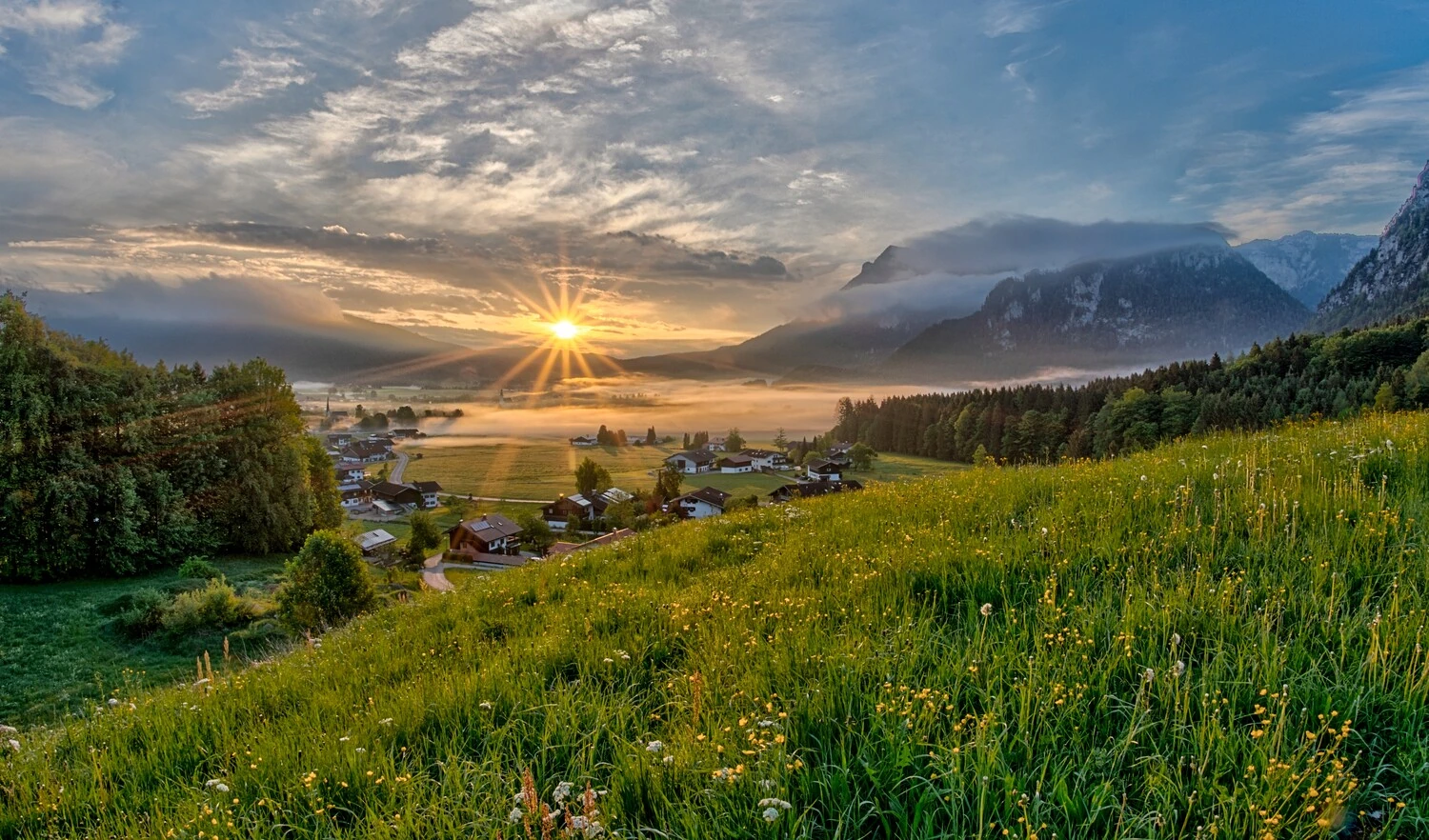

A journey through time
Inzella
One place. Many centuries. And so much life in the here and now.
A journey through time
One place. Many centuries. And so much life in the here and now.
959
A charter describes forest and hunting land between Teisenberg and Staufen. An early trace of the area, not yet evidence of the name Inzella.
Source: Municipality of Inzell ↗1177
On 20 September 1177, the estate and forest of Inzella were given to St. Zeno. The municipality regards this charter as its founding document.
Source: Municipality of Inzell ↗1195
In 1195, Inzell became an independent parish and Hofmark. Its name is associated with an “inner cell”. Read more under “Project, images & sources”.
Source: Municipality of Inzell ↗1585
Lead and calamine provided livelihoods. In 1585, mining on the Staufen was also the subject of a border dispute.
Source: Municipality of Inzell ↗17th century
The salt road connected Inzell with Reichenhall and Munich. A brine pipeline changed transport in the early 17th century.
Source: Inzell Tourist Board ↗1724–1727
Fire damaged St. Michael in 1724. Its tower survived; the present church was built between 1725 and 1727.
Source: Parish church of St. Michael ↗1811–1818
The old Hofmark castle was demolished in 1811. In 1818, Bavarian administrative reforms established Inzell as an independent political municipality.
Source: Wikipedia · local history ↗1896
Summer visitors are documented at the Ödmühle in 1896. People were coming to Inzell for its landscape and for a holiday.
Source: Ödmühle · house history ↗1907
In 1907, postmaster Josef Spannring installed brine and mud-bath cabins at the Gasthof Post. Horse-drawn carriage excursions were also offered.
Source: Wikipedia · tourism history ↗1912–1914
A tourism and village-improvement association helped organise Inzell’s development as a destination. Better transport links and a local brochure made it easier for visitors to reach and discover the village.
Source: Municipality of Inzell · local history ↗1925
Between the world wars, walking routes were marked and a recreation park was laid out. In 1925, a bathing facility at the Zwingsee and the tourism association’s accommodation service followed.
Source: Wikipedia · tourism history ↗1939–1951
Tourism almost came to a halt during the Second World War. The local account records 54,000 overnight stays again in 1951.
Source: Wikipedia · tourism history ↗1957
Inzell has been a recognised climatic health resort since 1957. The summer retreat developed into a holiday destination attracting visitors with its landscape and leisure activities.
Source: Municipality of Inzell · local history ↗1959
From 1959, the natural ice of the Frillensee was prepared for training and competitions. This upland lake became the starting point of Inzell’s speed-skating story.
Source: Max Aicher Arena · history ↗1963–1965
A natural-ice stadium opened beside the Zwingsee in 1963. In 1965, it became a refrigerated 400-metre track and a national high-performance training centre.
Source: Max Aicher Arena · history ↗1968–1972
Erhard Keller won Olympic gold in 1968 and 1972. Monika Pflug became Olympic champion in 1972. Inzell’s speed-skating story became closely associated with internationally successful athletes.
Source: Max Aicher Arena · history ↗1969–2005
Inzell hosted the men’s European Championships in 1969 and the World Sprint Championships in 1971. Further world championships followed over the decades, including the 2005 World Single Distance Championships.
Source: Max Aicher Arena · sporting history ↗2009–2011
Between 2009 and 2011, the existing track was enclosed and roofed. The Max Aicher Arena officially opened on 10 March 2011 with the World Single Distance Championships.
Source: DOSB · arena opening ↗2019
In 2019, Inzell again hosted the World Single Distance Championships. In April, the Max Aicher Arena also hosted the ITF Taekwon-Do World Championships.
Source: Max Aicher Arena · sporting history ↗2024
From 7 to 10 March 2024, Inzell hosted the World Sprint and Allround Championships. Once again, the village became a meeting place for international speed skating.
Source: ISU · results 2024 ↗2026
On 24 January 2026, Sander Eitrem skated 5000 metres in 5:58.52: a world record and the first time below six minutes over that distance.
Source: ISU · world record in Inzell ↗Today
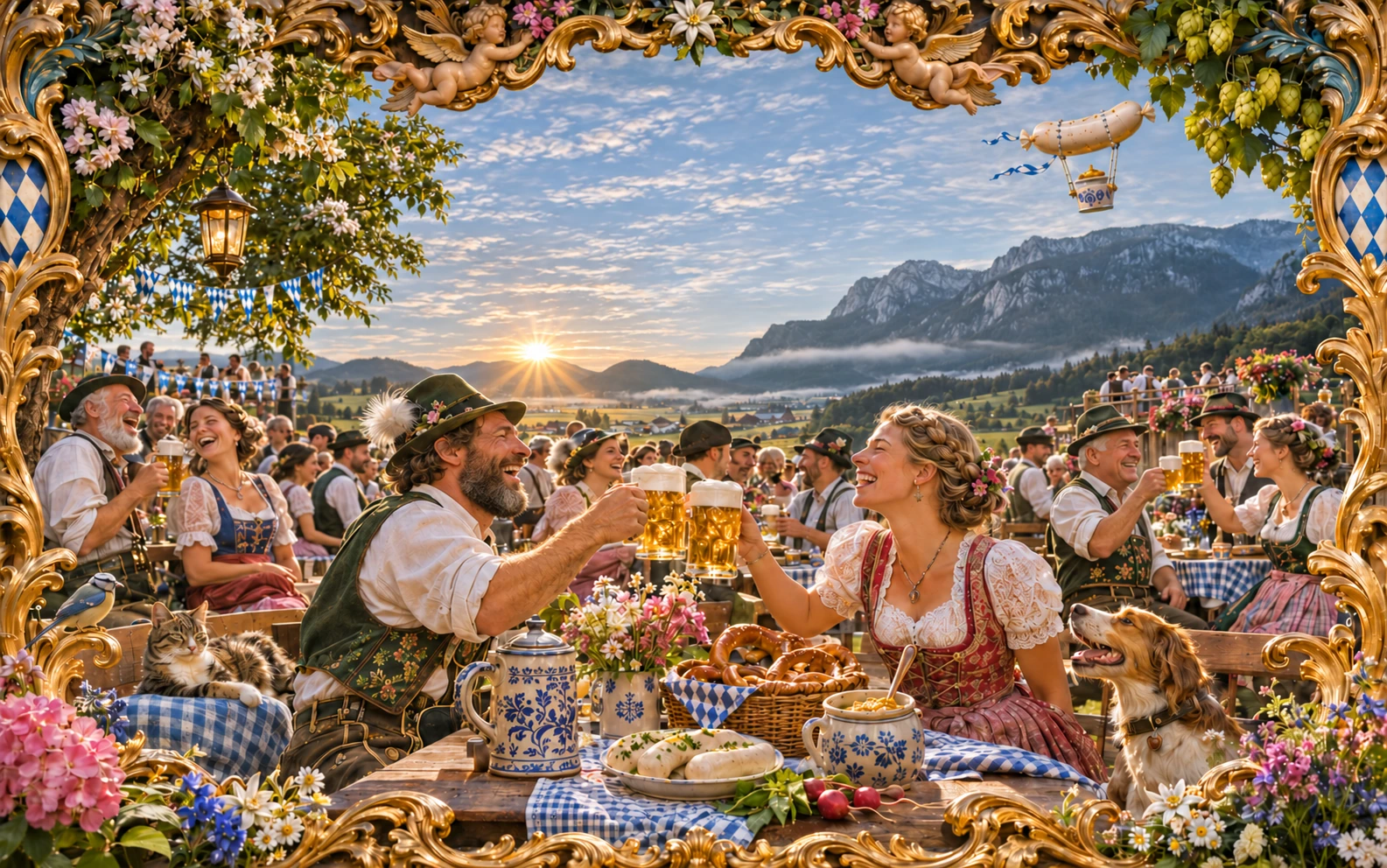
Walking, swimming, winter sports and living traditions belong together here. The Michaeliritt, Pfingstroas and raising of the maypole show a village shaped by people taking part.
Source: Inzeller Touristik GmbH ↗Here & now
Festivals, sport and encounters: Inzell is shaped by those who live here and those who visit. We celebrate today – and shape what comes next together.
A love letter to Inzell
To live here or be a guest, experience this landscape and enjoy life – for us, this is a gift from God.
Wheel or swipe: in & out
The story stays. The images rest.